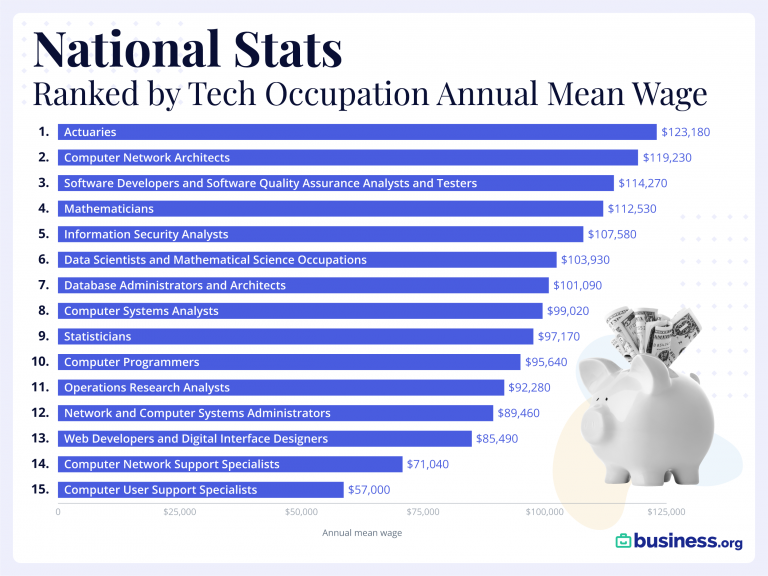
This project aims to provide insights into the salaries of technology professionals by conducting exploratory data analysis (EDA) and implementing machine learning models to predict salaries. The dataset used in this analysis contains information on gender, education level, years of experience, job titles, and corresponding salaries.
The dataset used for this analysis contains information on technology professionals, including gender, education level, years of experience, job titles, and salaries. The data is anonymized and cleaned for analysis purposes.
In this section, we explore the dataset to answer the following questions:
We analyze the gender pay gap within the technology industry to identify any significant disparities.
We investigate how education levels impact salary and calculate average salaries for various education levels.
We examine the relationship between years of experience and salary, providing insights into how experience influences earnings.
We analyze salary distributions across different job titles within the technology sector.
In this section, we build machine learning models to predict technology professionals' salaries based on the provided features.
We evaluate five different machine learning models to predict salaries and compare their performance. The models include neural networks, decision trees, random forests, gradient boosting, and K-Nearest Neighbors (KNN).
After rigorous evaluation, we determine that the K-Nearest Neighbors (KNN) model outperforms the others in terms of predictive accuracy for salary estimation. We provide details on the model's implementation, hyperparameter tuning, and performance metrics.