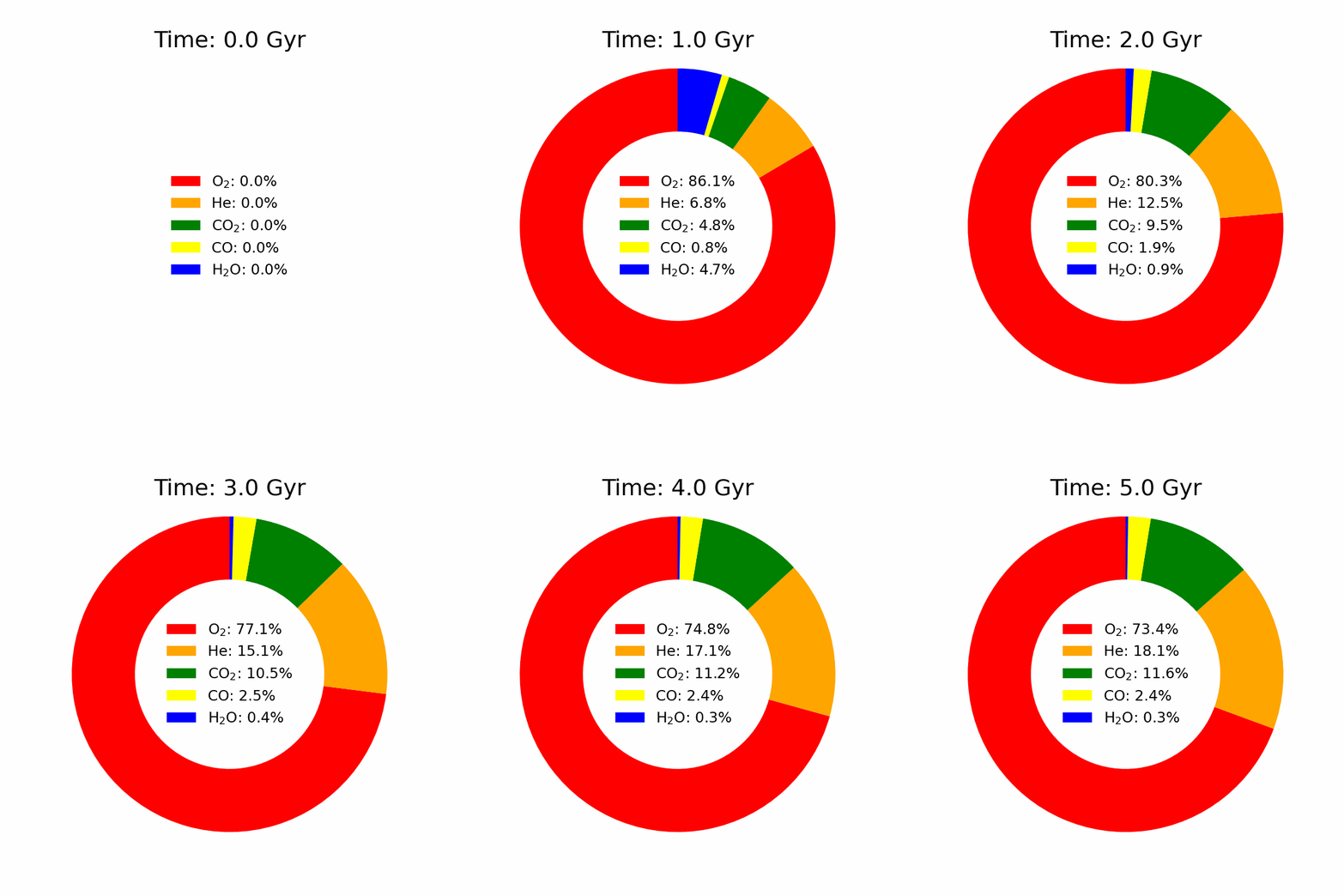
All figures shown here were generated from data discussed in Cherubim et al. 2025. The plotted data come from Monte Carlo simulations using a coupled atmospheric escape-magma ocean/equilibrium chemistry model (IsoFATE+Atmodeller). The selected figures correspond to energy-limited EUV-driven/radiative recombination-limited photoevaporation of planets around an early M type star.
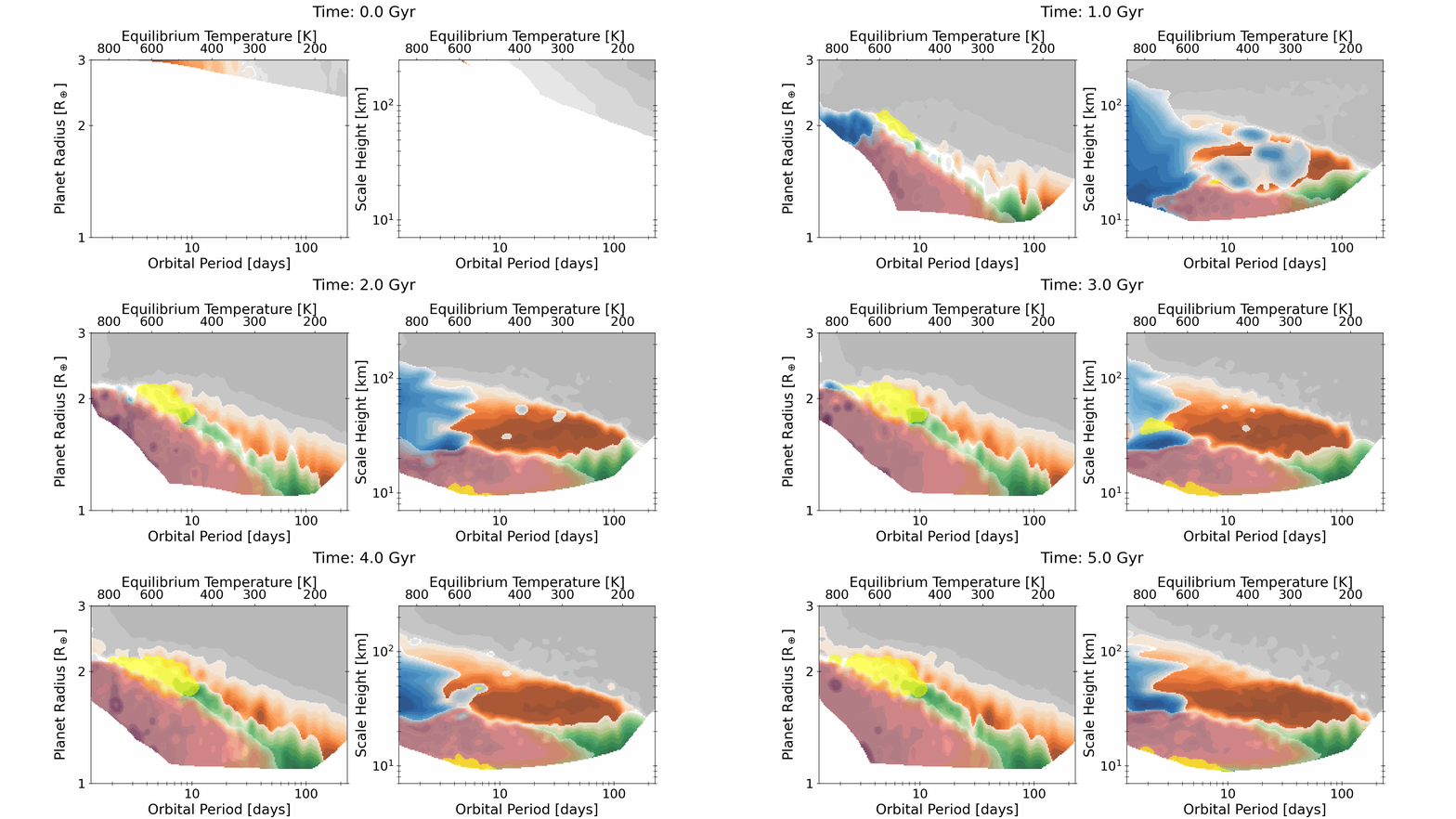
Atmospheric composition trends for simulated planets around M stars over time. Colors are chosen arbitrarily and color intensity indicates species molar concentrations as a function of orbital period vs. planet radius (left) and atmospheric scale height (right). Each group corresponds to atmospheres with molar concentration $\geq 50\%$ , except H2O, for which the cutoff is 5%. Red indicates O2, green indicates CO2, yellow indicates CO, blue indicates H2O, orange indicates He, and grey indicates H2. Planets trend toward greater oxidation with smaller radii and shorter orbital periods as a result of atmospheric escape-driven fractionation and magma ocean volatile exchange. H2O-rich planets are exceptional in that they are not well confined in period-raidus space and typically do not reach atmospheric molar concentrations above ~ 10% as a result of our dry start assumption.
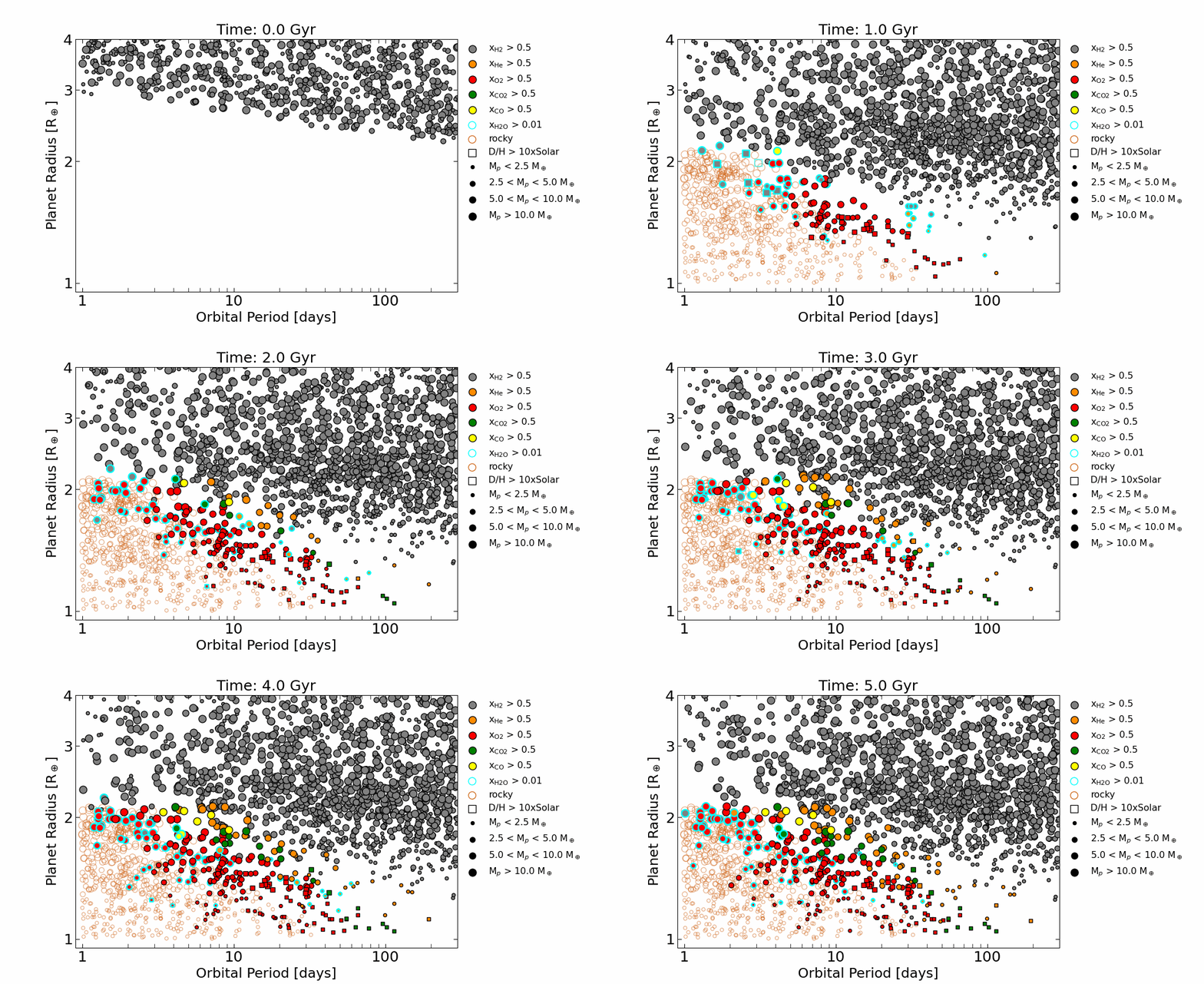
Atmospheric composition trends for simulated planets around M stars over time. xi indicates the molar concentration of a given species at each point in time. Brown circles indidate planets that have completely lost their atmospheres. Squares indicate planets that have elevated D/H ratios greater than 10 x protosolar D/H (Lodders et al. 2003). Marker size corresponds to the indicated planet mass bins. Some planets show marginal increases in radius after several Gyr as a result of late-stage volatile outgassing from the solidifying magma ocean. Most planets have non-zero mantle melt fractions by 5 Gyr.
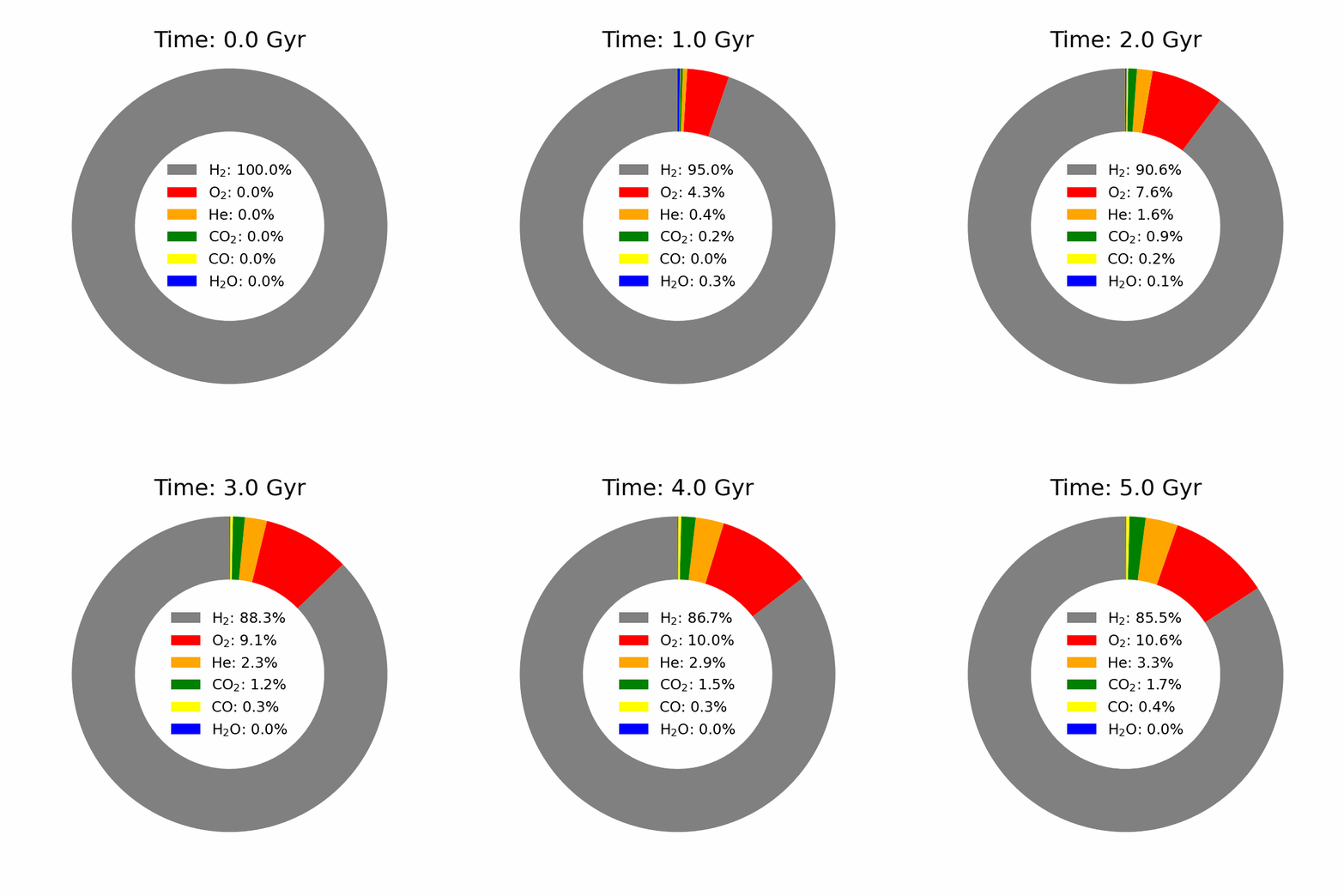
Atmospheric composition trends for simulated planets around M stars over time. Percentages reflect fractions of all simulated planets with the corresponding dominant atmospheric species. Planets with atmospheres dominated by molecular oxygen (O2 worlds) are the most common type of non-H2 planet, i.e. planets with secondary atmospheres that are largely sculpted by escape and interior exchange. This prediction is robust to many assumptions discussed in Cherubim et al. 2025.